सभी विषय की क्विज के लिए Join now Telegram group


Results for Computer

What is an Output Device ?

10:12 PM

What does Output Device mean?

Definition:-  
                     An output device is used to send data to any device or computer from any device to another device. Most computer data output is for humans, in the form of audio or video. Thus, most of the output devices used by humans are in these categories. Examples include monitors, projectors, speakers, headphones, and printers.


Techopedia explains Output Device.

Output devices allow the computer to communicate with users and other devices. It may include peripherals, which use input / output (I / O) purposes such as network interface card (NIC), modem, IR ports, RFID systems and wireless networking devices as well as mechanical output devices such as Solidides, Motor and others Electromechanical device.

Some common output devices of which people are familiar include monitors, which generate video output; Speakers, who produce audio output; And printers, which generate text or graphical output.


Types of Output Devices


The following list has many different output devices. For more information, select any list containing blue text.

     ➤3d printer

     ➤  Braille ambassador

     ➤  Braille reader

     ➤ Flat plaque

     ➤ GPS

     ➤ Headphones

     ➤  Computer output microfilm (COM)

     ➤  Monitor

     ➤ Plotter

     ➤ Printers (dot matrix printers, inkjet printers, and laser printers)
 
     ➤ Launcher
 
     ➤  sound card
 
     ➤  Speakers
   
     ➤  Speech-Generating Device (SGD)
   
     ➤ TV
   
     ➤  video card

Tip: Drive storage devices like CD-ROM, DVD, floppy diskette drive, and USB              flash drive are also considered.

Why do computers need output devices?

       A computer can still work without the output device. However, without the output device, you will have no way to determine what the computer is doing, if there are errors, or if it requires additional input. For example, you can disconnect your monitor from your computer, and it will still work, but it will not be very useful.


What is an Output Device ? What is an Output Device ? Reviewed by Tech YoGi on 10:12 PM Rating: 5

Input Devices

4:16 PM

Peripherals


Computer peripherals are used to input information and instructions in the computer for storage or processing and are used to process the processed data. In addition, computers that enable the transmission and reception of data between computers are often classified as peripherals.

input device

The device used to input data to computers is known as "input device". Or input device can read the data and convert them into a form that the computer can use. The output device can produce the final product of machine processing in humans as usable. This machine provides man for communication. Some I / O devices are explained below:

(1) Keyboard:
                          The keyboard is used in the input phase of the computer-based information system. Keyboard is the most common input device used today. By typing on the keyboard, data and instructions are input. The message typed on the keyboard reaches the memory unit of the computer. It is connected to a computer via a cable. In addition to alphabet and numeric keys, there are other function keys to perform different functions.


(2) MOUSE: 
  This is a pointing device. The mouse is rotated on the mouse pad, which, in turn, controls the movement of the cursor in the screen. We can double click or drag on the mouse. Most of the mouse has a ball below them, which will rotate when the mouse rotates. There are 2 wheels on the edges of the ball, which, in turn, mice with the movement of the ball. Sensor indicates the speed of your movements on the computer, which, in turn, moves the cursor / pointer to the screen.


(3) Scanner: 
                         Scanner is used to enter information directly in computer memory. This device works like a Xerox machine. The scanner converts printed or written information of any type, including photographs in digital pulses, which can be compromised by the computer.


(4) Track Ball: 
                           The track ball is similar to the upper design of the mouse. The user moves the ball directly, while the device stays stable. To influence screen screen movements, the user spin the ball in different directions.


(5) Light Pen: 

 This is an input device used to attract lines or figures on a computer screen. It has touched the CRT screen where it can detect the raster on the screen.


(6) Optical Character Rader:
                                                    This is the device that detects alpha numeric letters printed on or written on paper. The text to be scanned is published by low frequency light source. The light is absorbed from the dark areas but is reflected from the bright areas. Reflected light is obtained by photocals.


(7) Bar code reader:
                                    This device reads the bar code and puts them into electrical pulses to be processed by the computer. Once the code is nothing but the data is coded as light and dark bars.


(8) Voice input system:

 This device converts spoken words into M / C language form. A microphone is used to convert human speech into electrical signals. The signal pattern is then transmitted to the computer when it is compared to a dictionary of the pattern which was previously placed in the computer's storage unit. When a close match is received, the word is identified.


(9) Plotter: 
                   Plotter is an O / P device used to make graphical O / P on papers. It uses a single color or multi color pen to draw images as blue prints.


(10) Digital camera: 
                                        It converts graphics directly into digital form. It looks like a simple camera, but there is no film in it, instead the CCD (replaceable divide divide) electronic chip is used. When light falls, on the chip though on the lens, it converts light waves into electric waves.


Input Devices Input Devices Reviewed by Tech YoGi on 4:16 PM Rating: 5

Secondary memory

3:19 PM

Secondary memory

The computer has secondary memory data and storage for the program which is not currently in use. In addition to screwed card and paper tape, early computers used magnetic tape for secondary storage. The tape is cheap, either in big reels or small cassettes, but its disadvantage is that it should be sequentially read or written from one end to the other.
                                                                                  
IBM introduced the first magnetic disk, Ramac in 1955; It had 5 megabytes and was hired for $ 3,200 per month. Magnetic discs are platters coated with iron oxide like tape and drum. A hand with a small wire wire, reading / writing (R / W) head, basically runs on the disk, which is divided into data centered centered from small arcs, or areas of data. The magnetic field of the disk produces small currents in the coil because it passes, allowing it to "read" an area; Similarly, a small flow in the wire will induce local magnetic changes in the disc, which will "write" in one area. The disk rotates rapidly (up to 15,000 rotation per minute), and therefore R / W head can reach the disk faster than any area.

Initial discs were large removable platters. In the 1970s, IBM introduced sealed discs with fixed plaques known as Winchester Disk - probably because there were two earlier 30 megabyte platters, which suggested the Winchester 30-30 rifle. Not only was the sealed disk protected against dirt, R / W head could also "fly" on thin air film, which was very close to the platter.  By putting the head closer to the platter, the area of ​​oxide film that represents a bit, can be very small, thus increasing the storage capacity. This basic technique is still used.

computer hard drive


To increase the storage and data transfer rates, with the addition of R / W heads for two surfaces of each platter, many platitors in a disk drive include refining to add 10 or more. Due to even greater advantage the control of the radial speed of the disk arm has improved with the track hand, resulting in the density distribution of the data on the disc. By 2002, such a density had reached more than 8,000 tracks per centimeter (20,000 per track per inch), and the diameter of a plate could gigabytes of data. In 2002, the cost of an 80-gigabyte disc was $ 200- just about one millionth of the cost of 1955 and the decline in the price of main memory represented an annual decline of approximately 30 percent.

Optical storage devices- CD-ROMs (compact discs, read-only memory) and DVD-ROMs (digital video, or versatile discs) - appeared in the mid and late 90s of the 1980s. They both represent bits in the form of small pits in plastics, which are held in a longer spiral, written as a phonograph record and read with laser. A CD-ROM can hold 2 gigabytes of data. But by including the error-correction code (to correct for dust, small flaws and scratches), data can be reduced to 650 megabytes. DVDs are dens, small pits, and can hold up to 17 gigabytes with error correction.

The DVD player uses a laser which is high power and has a consistently better focus point compared to the CD player. This enables it to solve small pits and compressed separation tracks and thus has an account for more storage capacity of DVDs.

Optical storage devices are slower than magnetic disks, but they are well suited for making master copies of software or for multimedia (audio and video) files that are read sequentially. There are also writable and rewritable CD-ROMs (CD-R and CD-RW) and DVD-ROMs (DVD-R and DVD-RW) that can be used like magnetic tapes for inexpensive archiving and sharing of data.
 
The decreasing cost of memory continues to make new uses possible. A single CD-ROM can store 100 million words, more than twice as many words as are contained in the printed Encyclopædia Britannica. A DVD can hold a feature-length motion picture. Nevertheless, even larger and faster storage systems, such as three-dimensional optical media, are being developed for handling data for computer simulations of nuclear reactions, astronomical data, and medical data, including X-ray images. Such applications typically require many terabytes (1 terabyte = 1,000 gigabytes) of storage, which can lead to further complications in indexing and retrieval.


Secondary memory Secondary memory Reviewed by Tech YoGi on 3:19 PM Rating: 5

Main Memory

2:57 PM

Main Memory

                                                             
Early form of computer main memory were mercury delay lines, which were mercury tubes, which stored the data in the form of ultrasonic waves and cathode-ray tubes, which used to store data on the tubes screen as data. Magnetic drum invented in 1948 used iron oxide coating on the rotating drum to store data and programs as magnetic patterns.

In a binary computer, any bistable device (some which can be placed in one of two states) can represent two potential bit values ​​of 0 and 1 and thus can serve as a computer memory.

Magnetic-core memory, the first relatively cheap RAM device, appeared in 1952. This two-dimensional wire was made of tiny, donut-shaped ferrite magnets at intersection points of the grid. These stars carried the currents to change the direction of the magnetism of each core, while the third string threaded through the donut detected its magnetic orientation.

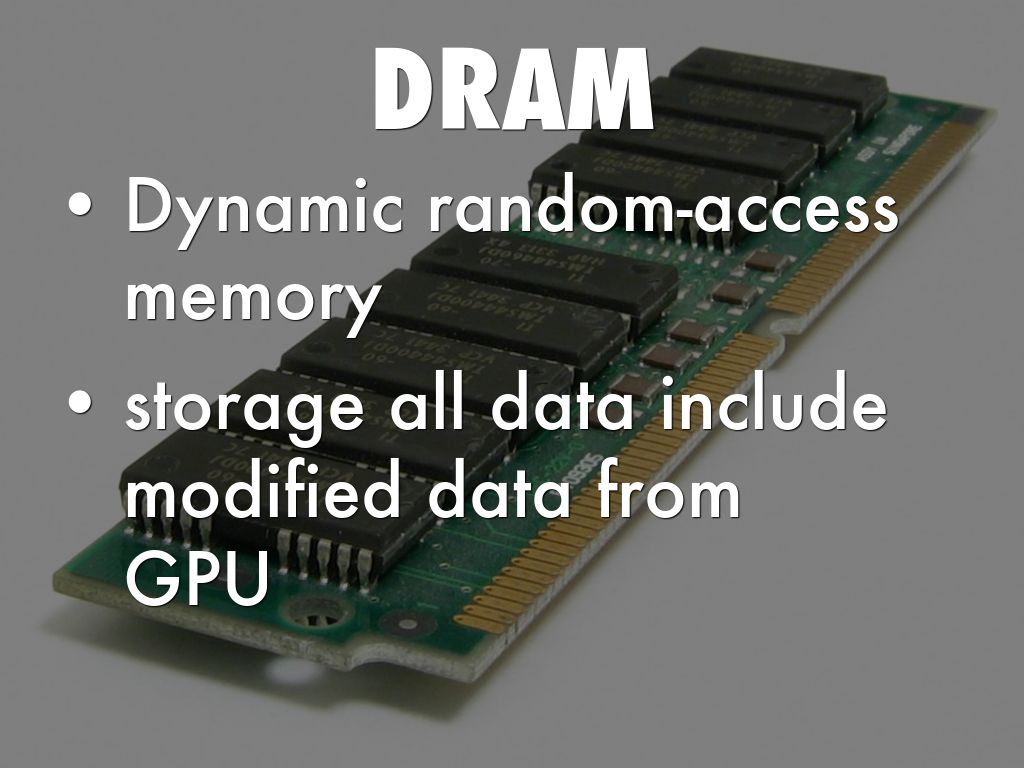
The first integrated circuit (IC) memory chip was shown in 1971. The IC store stores a little bit in combination with the transistor-capacitor. The capacitor is charged for representing 1 and there is no charge for 0; The transistor switches between these two states. Since a capacitor charge is decayed gradually, the IC memory is the dynamic RAM (DRAM) in which its stored values ​​should be periodically refreshed (Either 20 milliseconds each). There is also a static RAM (SRAM), which does not need to be refreshed. Although faster than DRAM, SRAM uses more transistors and thus is more expensive; Its primarily used for CPU internal registers and cache memory.

In addition to the main memory, computers for computer displays typically have special video memory (VRAM) to keep graphic images, which are called bitmaps. This memory is often a dual port - a new image can be stored at the same time as its current data is being read and displayed.

It takes time to specify an address in the memory chip, and since memory is slower than a CPU, therefore there is a benefit to memory that can quickly move a series of words after the address is specified. One such design is known as synchronous DRAM (SDRAM), which was widely used until 2001.


Even so, data transfer through "bus" - a set of stars that connects the CPU to memory and peripheral devices-is an obstacle. For this reason, CPU chips now have cache memory - small amounts of fast SRAM. Cache contains copies of data from blocks of main memory. A well designed cache can be done from 85-90 percent of memory references in general programs, which leads to manifold speed in data access.

The time between the two memory reading or writing (cycle time) for the initial core memory was approximately 17 microdes (one millionth of a second) and in the beginning of the decade of 1970, there was approximately 1 microsound for the core. The first DRAM had about half the cycle cycle of Microsoft, or 500 nanoseconds (one billionth of a second), and today it is 20 nanoseconds or less. An equally important measure is the cost per bit of memory. The first DRAM stores 128 bytes.


 (1 byte = 8 bits) and spends around $ 10, or $ 80,000 per megabyte (millions of bytes). DRAM can be purchased for less than $ 0.25 per megabyte in 2001. This huge drop in cost has resulted in large scale manipulation and visualization of possible graphical user interfaces (GUIs), display fonts of word processors, and scientific computers.


Main Memory Main Memory Reviewed by Tech YoGi on 2:57 PM Rating: 5

Computer hardware

11:48 AM

Computer hardware


The physical elements of a computer, its hardware, are generally divided into the central processing unit (CPU), main memory (or random-access memory, RAM), and peripherals. The last class encompasses all sorts of input and output (I/O) devices: keyboard, display monitor, printer, disk drives, network connections, scanners, and more.
                                          
The CPU and RAM are integrated circuits (ICs)—small silicon wafers, or chips, that contain thousands or millions of transistors that function as electrical switches. In 1965 Gordon Moore, one of the founders of Intel, stated what has become known as Moore’s law: the number of transistors on a chip doubles about every 18 months. Moore suggested that financial constraints would soon cause his law to break down, but it has been remarkably accurate for far longer than he first envisioned. It now appears that technical constraints may finally invalidate Moore’s law, since sometime between 2010 and 2020 transistors would have to consist of only a few atoms each, at which point the laws of quantum physics imply that they would cease to function reliably.


Moore's lawIn 1965 Gordon E. Moore observed that the number of transistors on a computer chip was doubling about every 18–24 months. As shown in the logarithmic graph of the number of transistors on Intel's processors at the time of their introduction, his “law” is still being obeyed.


Central processing unit


The CPU provides the circuits that implement the computer’s instruction set—its machine language. It is composed of an arithmetic-logic unit (ALU) and control circuits. The ALU carries out basic arithmetic and logic operations, and the control section determines the sequence of operations, including branch instructions that transfer control from one part of a program to another. Although the main memory was once considered part of the CPU, today it is regarded as separate. The boundaries shift, however, and CPU chips now also contain some high-speed cache memory where data and instructions are temporarily stored for fast access.

The ALU has circuits that add, subtract, multiply, and divide two arithmetic values, as well as circuits for logic operations such as AND and OR (where a 1 is interpreted as true and a 0 as false, so that, for instance, 1 AND 0 = 0; see Boolean algebra). The ALU has several to more than a hundred registers that temporarily hold results of its computations for further arithmetic operations or for transfer to main memory.

The circuits in the CPU control section provide branch instructions, which make elementary decisions about what instruction to execute next. For example, a branch instruction might be “If the result of the last ALU operation is negative, jump to location A in the program; otherwise, continue with the following instruction.” Such instructions allow “if-then-else” decisions in a program and execution of a sequence of instructions, such as a “while-loop” that repeatedly does some set of instructions while some condition is met. A related instruction is the subroutine call, which transfers execution to a subprogram and then, after the subprogram finishes, returns to the main program where it left off.

In a stored-program computer, programs and data in memory are indistinguishable. Both are bit patterns—strings of 0s and 1s—that may be interpreted either as data or as program instructions, and both are fetched from memory by the CPU. The CPU has a program counter that holds the memory address (location) of the next instruction to be executed. The basic operation of the CPU is the “fetch-decode-execute” cycle:

    Fetch the instruction from the address held in the program counter, and store it in a register.
    Decode the instruction. Parts of it specify the operation to be done, and parts specify the data on which it is to operate. These may be in CPU registers or in memory locations. If it is a branch instruction, part of it will contain the memory address of the next instruction to execute once the branch condition is satisfied.
    Fetch the operands, if any.
    Execute the operation if it is an ALU operation.
    Store the result (in a register or in memory), if there is one.
    Update the program counter to hold the next instruction location, which is either the next memory location or the address specified by a branch instruction.

                                            
At the end of these steps the cycle is ready to repeat, and it continues until a special halt instruction stops execution.

Steps of this cycle and all internal CPU operations are regulated by a clock that oscillates at a high frequency (now typically measured in gigahertz, or billions of cycles per second). Another factor that affects performance is the “word” size—the number of bits that are fetched at once from memory and on which CPU instructions operate. Digital words now consist of 32 or 64 bits, though sizes from 8 to 128 bits are seen.

Processing instructions one at a time, or serially, often creates a bottleneck because many program instructions may be ready and waiting for execution. Since the early 1980s, CPU design has followed a style originally called reduced-instruction-set computing (RISC). This design minimizes the transfer of data between memory and CPU (all ALU operations are done only on data in CPU registers) and calls for simple instructions that can execute very quickly. As the number of transistors on a chip has grown, the RISC design requires a relatively small portion of the CPU chip to be devoted to the basic instruction set. The remainder of the chip can then be used to speed CPU operations by providing circuits that let several instructions execute simultaneously, or in parallel.

There are two major kinds of instruction-level parallelism (ILP) in the CPU, both first used in early supercomputers. One is the pipeline, which allows the fetch-decode-execute cycle to have several instructions under way at once. While one instruction is being executed, another can obtain its operands, a third can be decoded, and a fourth can be fetched from memory. If each of these operations requires the same time, a new instruction can enter the pipeline at each phase and (for example) five instructions can be completed in the time that it would take to complete one without a pipeline. The other sort of ILP is to have multiple execution units in the CPU—duplicate arithmetic circuits, in particular, as well as specialized circuits for graphics instructions or for floating-point calculations (arithmetic operations involving noninteger numbers, such as 3.27). With this “superscalar” design, several instructions can execute at once.

Both forms of ILP face complications. A branch instruction might render preloaded instructions in the pipeline useless if they entered it before the branch jumped to a new part of the program. Also, superscalar execution must determine whether an arithmetic operation depends on the result of another operation, since they cannot be executed simultaneously. CPUs now have additional circuits to predict whether a branch will be taken and to analyze instructional dependencies. These have become highly sophisticated and can frequently rearrange instructions to execute more of them in parallel.

Computer hardware Computer hardware Reviewed by Tech YoGi on 11:48 AM Rating: 5

Computer Introduction- 2

12:37 PM
Invention of the modern computer (⇊)

Mainframe computer


During the 1950s and ’60s, Unisys (maker of the UNIVAC computer), International Business Machines Corporation (IBM), and other companies made large, expensive computers of increasing power. They were used by major corporations and government research laboratories, typically as the sole computer in the organization. In 1959 the IBM 1401 computer rented for $8,000 per month (early IBM machines were almost always leased rather than sold), and in 1964 the largest IBM S/360 computer cost several million dollars.

These computers came to be called mainframes, though the term did not become common until smaller computers were built. Mainframe computers were characterized by having (for their time) large storage capabilities, fast components, and powerful computational abilities. They were highly reliable, and, because they frequently served vital needs in an organization, they were sometimes designed with redundant components that let them survive partial failures. Because they were complex systems, they were operated by a staff of systems programmers, who alone had access to the computer. Other users submitted “batch jobs” to be run one at a time on the mainframe.

Such systems remain important today, though they are no longer the sole, or even primary, central computing resource of an organization, which will typically have hundreds or thousands of personal computers (PCs). Mainframes now provide high-capacity data storage for Internet servers, or, through time-sharing techniques, they allow hundreds or thousands of users to run programs simultaneously. Because of their current roles, these computers are now called servers rather than mainframes.


Supercomputer


The most powerful computers of the day have typically been called supercomputers. They have historically been very expensive and their use limited to high-priority computations for government-sponsored research, such as nuclear simulations and weather modeling. Today many of the computational techniques of early supercomputers are in common use in PCs. On the other hand, the design of costly, special-purpose processors for supercomputers has been supplanted by the use of large arrays of commodity processors (from several dozen to over 8,000) operating in parallel over a high-speed communications network.


Minicomputer


Although minicomputers date to the early 1950s, the term was introduced in the mid-1960s. Relatively small and inexpensive, minicomputers were typically used in a single department of an organization and often dedicated to one task or shared by a small group. Minicomputers generally had limited computational power, but they had excellent compatibility with various laboratory and industrial devices for collecting and inputting data.

One of the most important manufacturers of minicomputers was Digital Equipment Corporation (DEC) with its Programmed Data Processor (PDP). In 1960 DEC’s PDP-1 sold for $120,000. Five years later its PDP-8 cost $18,000 and became the first widely used minicomputer, with more than 50,000 sold. The DEC PDP-11, introduced in 1970, came in a variety of models, small and cheap enough to control a single manufacturing process and large enough for shared use in university computer centres; more than 650,000 were sold. However, the microcomputer overtook this market in the 1980s.


Microcomputer


A microcomputer is a small computer built around a microprocessor integrated circuit, or chip. Whereas the early minicomputers replaced vacuum tubes with discrete transistors, microcomputers (and later minicomputers as well) used microprocessors that integrated thousands or millions of transistors on a single chip. In 1971 the Intel Corporation produced the first microprocessor, the Intel 4004, which was powerful enough to function as a computer although it was produced for use in a Japanese-made calculator. In 1975 the first personal computer, the Altair, used a successor chip, the Intel 8080 microprocessor. Like minicomputers, early microcomputers had relatively limited storage and data-handling capabilities, but these have grown as storage technology has improved alongside processing power.


In the 1980s it was common to distinguish between microprocessor-based scientific workstations and personal computers. The former used the most powerful microprocessors available and had high-performance colour graphics capabilities costing thousands of dollars. They were used by scientists for computation and data visualization and by engineers for computer-aided engineering. Today the distinction between workstation and PC has virtually vanished, with PCs having the power and display capability of workstations.


Embedded processors


Another class of computer is the embedded processor. These are small computers that use simple microprocessors to control electrical and mechanical functions. They generally do not have to do elaborate computations or be extremely fast, nor do they have to have great “input-output” capability, and so they can be inexpensive. Embedded processors help to control aircraft and industrial automation, and they are common in automobiles and in both large and small household appliances. One particular type, the digital signal processor (DSP), has become as prevalent as the microprocessor. DSPs are used in wireless telephones, digital telephone and cable modems, and some stereo equipment.

Computer Introduction- 2 Computer Introduction- 2 Reviewed by Tech YoGi on 12:37 PM Rating: 5

Computer Introduction- 1

10:34 AM

Computer


Computer, device for processing, storing, and displaying information.

Computer once meant a person who did computations, but now the term almost universally refers to automated electronic machinery. The first section of this article focuses on modern digital electronic computers and their design, constituent parts, and applications. The second section covers the history of computing. For details on computer architecture, software, and theory, see computer science.

Computing basics


The first computers were used primarily for numerical calculations. However, as any information can be numerically encoded, people soon realized that computers are capable of general-purpose information processing. Their capacity to handle large amounts of data has extended the range and accuracy of weather forecasting. Their speed has allowed them to make decisions about routing telephone connections through a network and to control mechanical systems such as automobiles, nuclear reactors, and robotic surgical tools. They are also cheap enough to be embedded in everyday appliances and to make clothes dryers and rice cookers “smart.” Computers have allowed us to pose and answer questions that could not be pursued before. These questions might be about DNA sequences in genes, patterns of activity in a consumer market, or all the uses of a word in texts that have been stored in a database. Increasingly, computers can also learn and adapt as they operate.

Computers also have limitations, some of which are theoretical. For example, there are undecidable propositions whose truth cannot be determined within a given set of rules, such as the logical structure of a computer. Because no universal algorithmic method can exist to identify such propositions, a computer asked to obtain the truth of such a proposition will (unless forcibly interrupted) continue indefinitely—a condition known as the “halting problem.” (See Turing machine.) Other limitations reflect current technology. Human minds are skilled at recognizing spatial patterns—easily distinguishing among human faces, for instance—but this is a difficult task for computers, which must process information sequentially, rather than grasping details overall at a glance. Another problematic area for computers involves natural language interactions. Because so much common knowledge and contextual information is assumed in ordinary human communication, researchers have yet to solve the problem of providing relevant information to general-purpose natural language programs.

1. Analog computers


Analog computers use continuous physical magnitudes to represent quantitative information. At first they represented quantities with mechanical components (see differential analyzer and integrator), but after World War II voltages were used; by the 1960s digital computers had largely replaced them. Nonetheless, analog computers, and some hybrid digital-analog systems, continued in use through the 1960s in tasks such as aircraft and spaceflight simulation.

One advantage of analog computation is that it may be relatively simple to design and build an analog computer to solve a single problem. Another advantage is that analog computers can frequently represent and solve a problem in “real time”; that is, the computation proceeds at the same rate as the system being modeled by it. Their main disadvantages are that analog representations are limited in precision—typically a few decimal places but fewer in complex mechanisms—and general-purpose devices are expensive and not easily programmed.


2. Digital computers


In contrast to analog computers, digital computers represent information in discrete form, generally as sequences of 0s and 1s (binary digits, or bits). The modern era of digital computers began in the late 1930s and early 1940s in the United States, Britain, and Germany. The first devices used switches operated by electromagnets (relays). Their programs were stored on punched paper tape or cards, and they had limited internal data storage. For historical developments, see the section Invention of the modern computer.

Computer Introduction- 1 Computer Introduction- 1 Reviewed by Tech YoGi on 10:34 AM Rating: 5

.

Powered by Blogger.